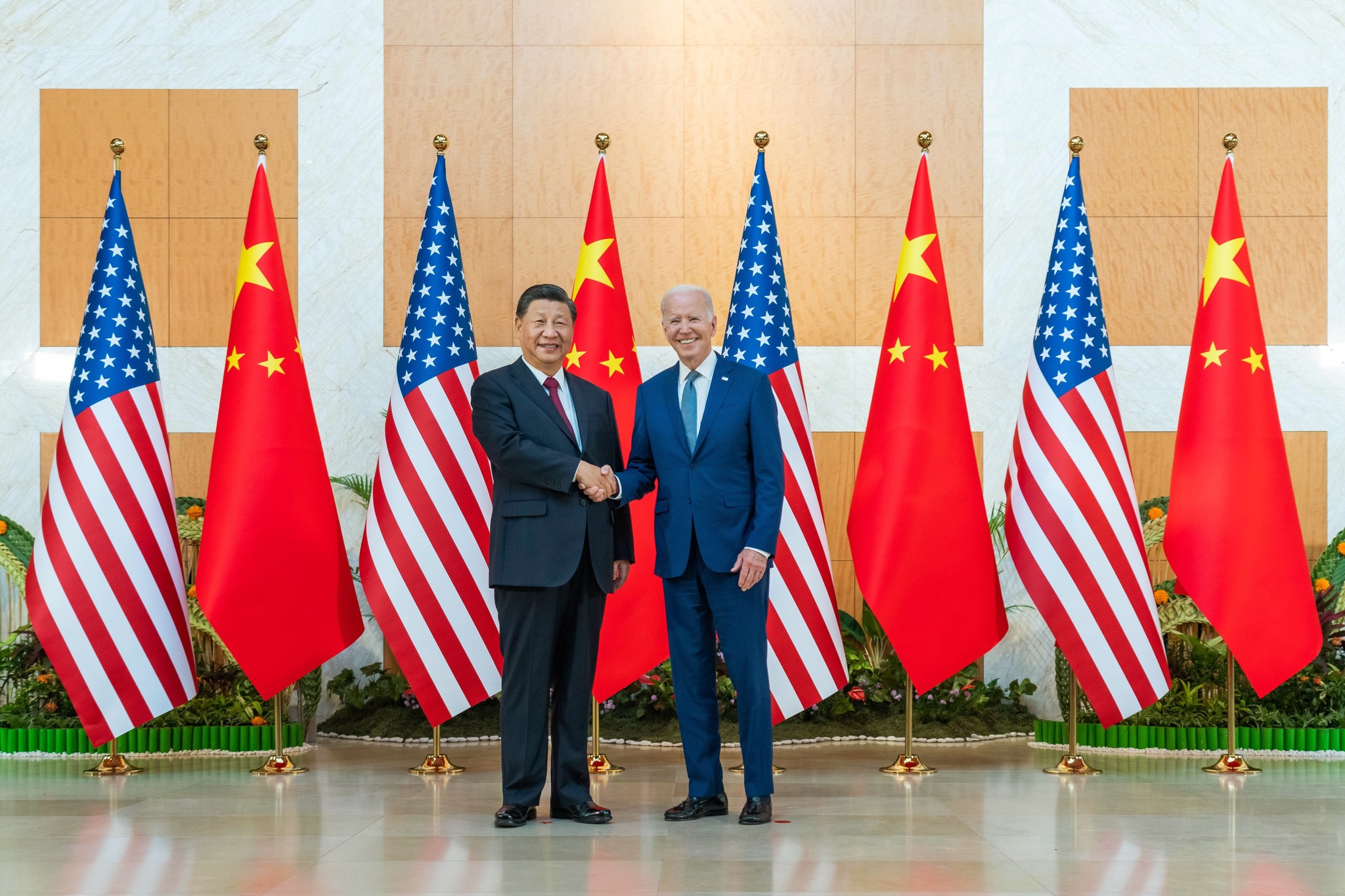
President Xi Jinping said artificial intelligence development should be a collaborative global effort and not dominated by any single nation [1, 3].
The statement arrives as the U.S. continues to implement technology curbs that limit China's access to advanced semiconductors and AI hardware [2]. By advocating for a multilateral approach, China seeks to position itself as a leader in global AI governance while challenging the current technological lead held by Western firms.
Speaking at a major technology conference in Shanghai on Friday, Xi said global efforts in the field should be stepped up [1, 3]. He said that international cooperation is necessary to ensure that the development of AI remains balanced and does not serve the interests of a single power [1, 4].
Xi linked the need for shared governance to concerns over national security and the risk of technological monopolies [2, 4]. He said that a fragmented approach to AI development could lead to instability and prevent the technology from benefiting the global community at large [4].
The Chinese leader's remarks highlight the growing tension between the pursuit of AI supremacy and the desire for a standardized global regulatory framework. While China emphasizes cooperation, the U.S. has maintained that restrictions are necessary to prevent the misuse of AI for military purposes [2].
Xi said that the international community must work together to prevent any one country from monopolizing the technology [1, 3]. This push for inclusivity is aimed at building alliances with other nations that may feel excluded by U.S.-led tech ecosystems [2].
“AI development should be a collaborative global effort and not dominated by any single nation.”
Xi Jinping's call for global AI cooperation is a strategic response to U.S. export controls. By framing the U.S. position as a monopoly, China aims to attract international partners and establish an alternative governance model for AI that reduces its dependence on American technology.


