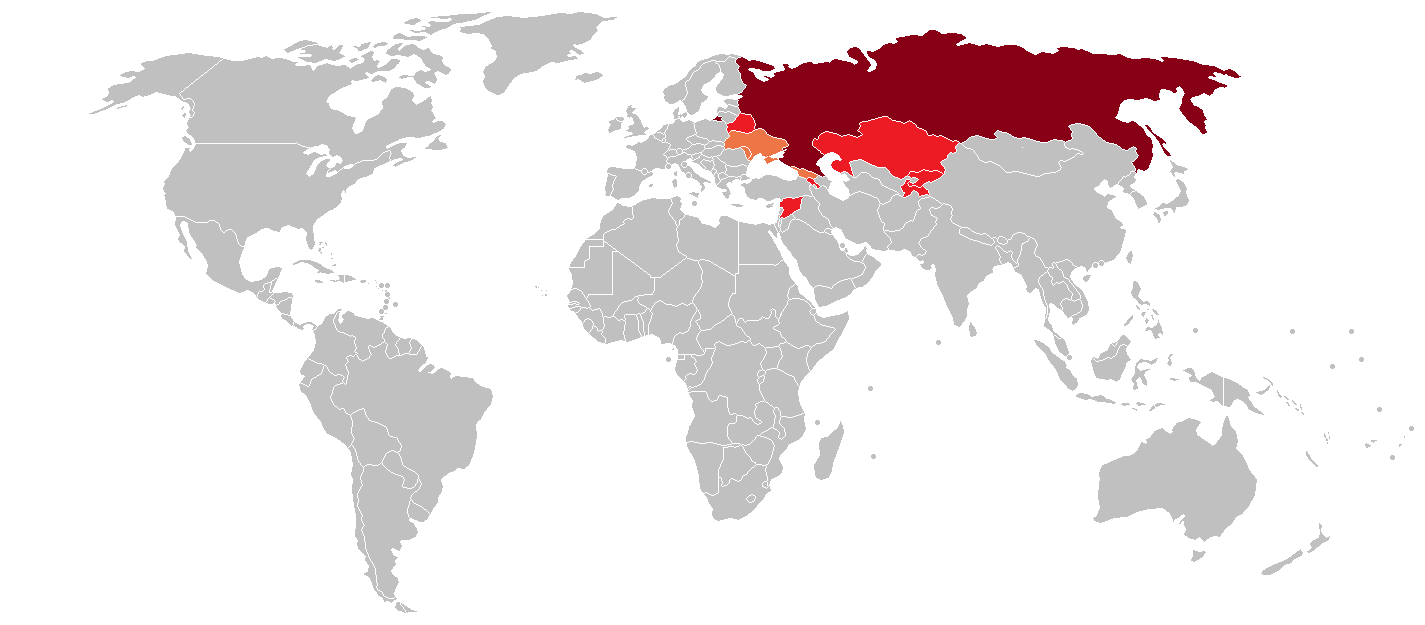
Ukrainian President Volodymyr Zelensky warned that Russia seeks an additional 30,000 North Korean troops [1] to support its military efforts.
This development signals a deepening military alliance between Moscow and Pyongyang that could expand the conflict's scope beyond Eastern Europe. The introduction of foreign combat troops and advanced weaponry increases the risk of wider regional escalation.
Zelensky said that Russia is preparing to receive a new ballistic-missile launch site from North Korea [1]. This military infrastructure is reportedly being positioned in the Boronese region of southwestern Russia, near the Ukrainian border [1].
The Ukrainian leader described the arrangement as a "dangerous treaty" [1]. He said that North Korea is preparing to provide these new launch capabilities to Russia as part of their ongoing cooperation.
According to Zelensky, the human cost of this partnership is already evident, with 6,000 casualties already suffered [1]. Despite these losses, he said that Russia continues to push for more manpower from the East.
Zelensky said the move is not only a threat to Ukraine but also to all Asian countries within the range of North Korean missiles [1]. He said that the strategic shift creates a security risk for multiple nations across the continent.
These warnings follow a diplomatic visit by the North Korean foreign minister to Moscow on the 19th of this month [2]. The timing of the visit suggests a coordination of military logistics, and troop movements between the two nations.
“Russia wants an additional 30,000 North Korean troops.”
The potential deployment of 30,000 additional troops and the installation of North Korean ballistic-missile sites in southwestern Russia represent a significant escalation in the internationalization of the war. By integrating North Korean hardware and personnel directly into Russian territory near the border, the Kremlin is diversifying its combat capabilities while Pyongyang gains operational experience and strategic leverage. This cooperation transforms a bilateral conflict into a broader security challenge for both European and Asian allies.


