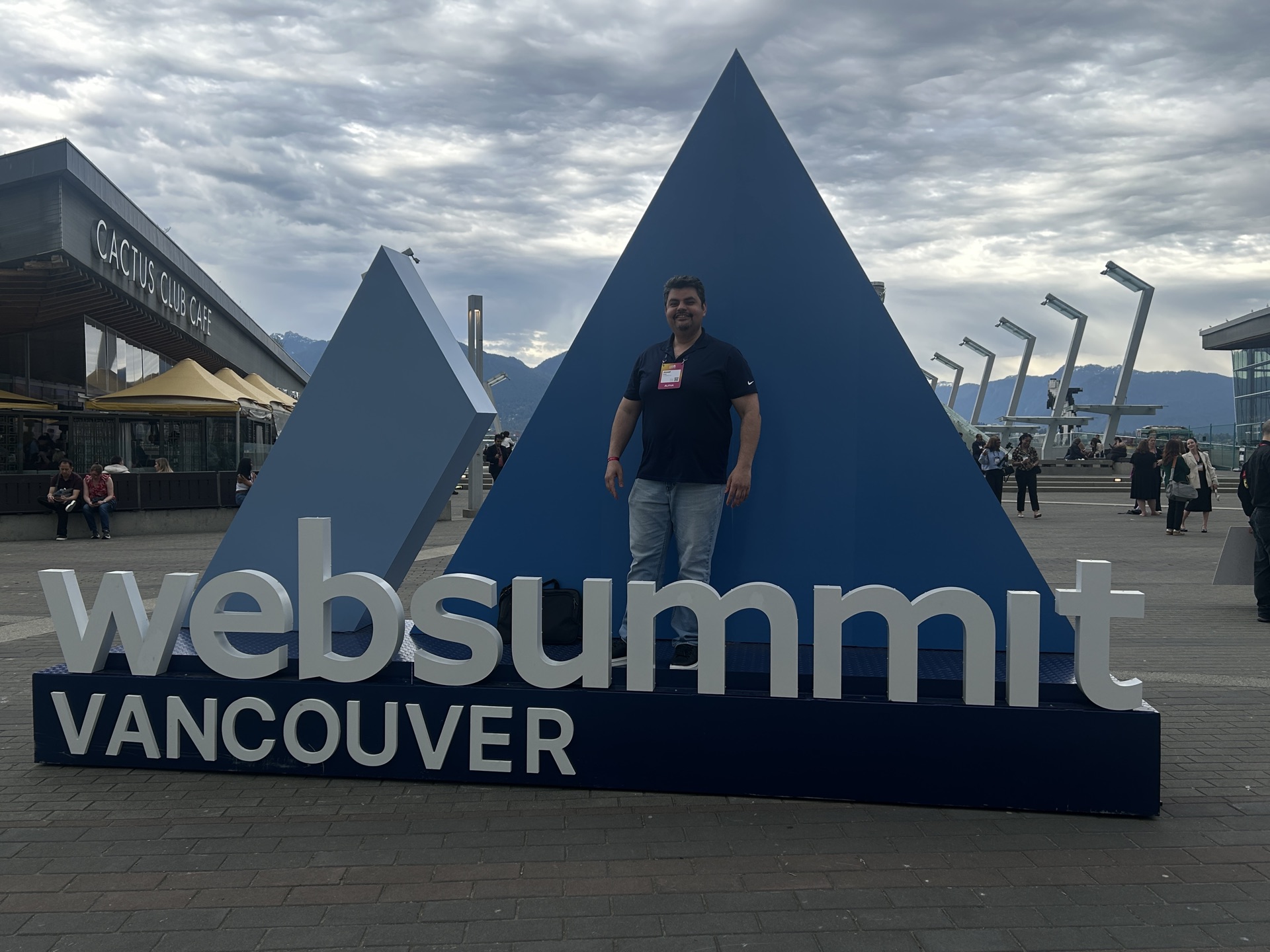
At Web Summit Vancouver 2026, The Solutioners Labs Argues for AI That Actually Belongs Inside the Building
Founders Jawad Khalil and Nasir Teherany came to Vancouver with a quiet pitch in a loud week. After a decade running cybersecurity for Canada’s most regulated firms, they think the AI conversation has finally arrived where they have been standing.
Jawad Khalil at Web Summit Vancouver, May 2026 · Editorial
◆ Latest update · Sat, Jun 27, 3:35 AM
No new developments have emerged concerning The Solutioners Labs, its founders Jawad Khalil and Nasir Teherany, or any activity tied to their sovereign‑AI platform at Web Summit Vancouver since the June 14 update. Recent Canadian business and technology coverage continues to focus on unrelated stories: the federal government’s $2.3 billion “AI for All” strategy announced on June 8, and the G7 summit’s discussion of AI and tech sovereignty on June 17, as reported in France 24 English and CNBC TV18. Neither piece references The Solutioners Labs, its “active intelligence” solution, or any engagement with the summit’s programming.
A development would be signaled by a scheduled speaking slot, panel participation, or product demonstration by the founders at the summit; a press release announcing a partnership with a regulated‑industry client such as a bank, law firm, or insurance carrier; a formal submission of a policy brief to federal officials that cites the firm’s approach to AI sovereignty; or media coverage linking the company to the national AI strategy or the G7 dialogue on sovereign technology. Absent such reporting, the narrative remains unchanged: the firm’s presence at the conference has been limited to informal observation, and no public statements have been made linking its platform to Canada’s broader AI initiatives. Future updates will note any official announcements, collaborations, or policy engagements that directly involve The Solutioners Labs or its AI‑governance framework.
◇ Earlier update · Sun, Jun 14, 3:01 AM
No new developments have emerged regarding The Solutioners Labs or its founders’ participation in Web Summit Vancouver since the May 13 briefing. The recent feed of Canadian business and technology news includes a range of unrelated items—Purecore Metals’ CSE listing, Emtar Technologies’ startup award, and a series of cultural and sporting events tied to the 2026 FIFA World Cup—but none mention the Toronto‑based firm, its sovereign‑AI platform, or any statements made on the summit floor.
A development would be signaled by any of the following: a scheduled speaking slot or panel appearance by Jawad Khalil or Nasir Teherany at Web Summit Vancouver; a press release announcing a partnership between The Solutioners Labs and a regulated‑industry client, such as a Canadian bank or law firm; a demonstration of the “active intelligence” solution at a trade‑show booth; commentary from the founders on Canada’s newly unveiled $2.3 billion “AI for All” national strategy announced on June 8; or coverage of a policy brief submitted to federal officials that references the firm’s approach to AI sovereignty.
Absent such reporting, the story’s narrative remains unchanged. Future updates will note any formal announcements, product rollouts, or policy engagements that directly involve The Solutioners Labs or its AI‑governance framework. Until then, the article’s focus stays on the background context provided in the original briefing.
☐ Background · published Wed, May 13, 7:47 AM
Vancouver on a Tuesday in May is grey-blue and a little cool, the kind of West Coast morning that softens the edges of everything. The Convention Centre sits right on the harbour. Seaplanes lift off behind the speakers’ tent. The mountains on the North Shore look closer than they are.
Twenty thousand people are walking past a giant white-and-blue "websummit Vancouver" wordmark on the plaza. They have come from a hundred countries for the second edition of Web Summit Vancouver — year two of a three-year run the city has committed to. Among them are Jawad Khalil and Nasir Teherany, the two founders of The Solutioners Labs, a Toronto-based firm that has spent the last eighteen months building what they call sovereign active intelligence for regulated industries.
They are not here to demo a new chatbot. They are here, by their own description, to argue against the chatbot — against the idea that AI is just a window you type into.
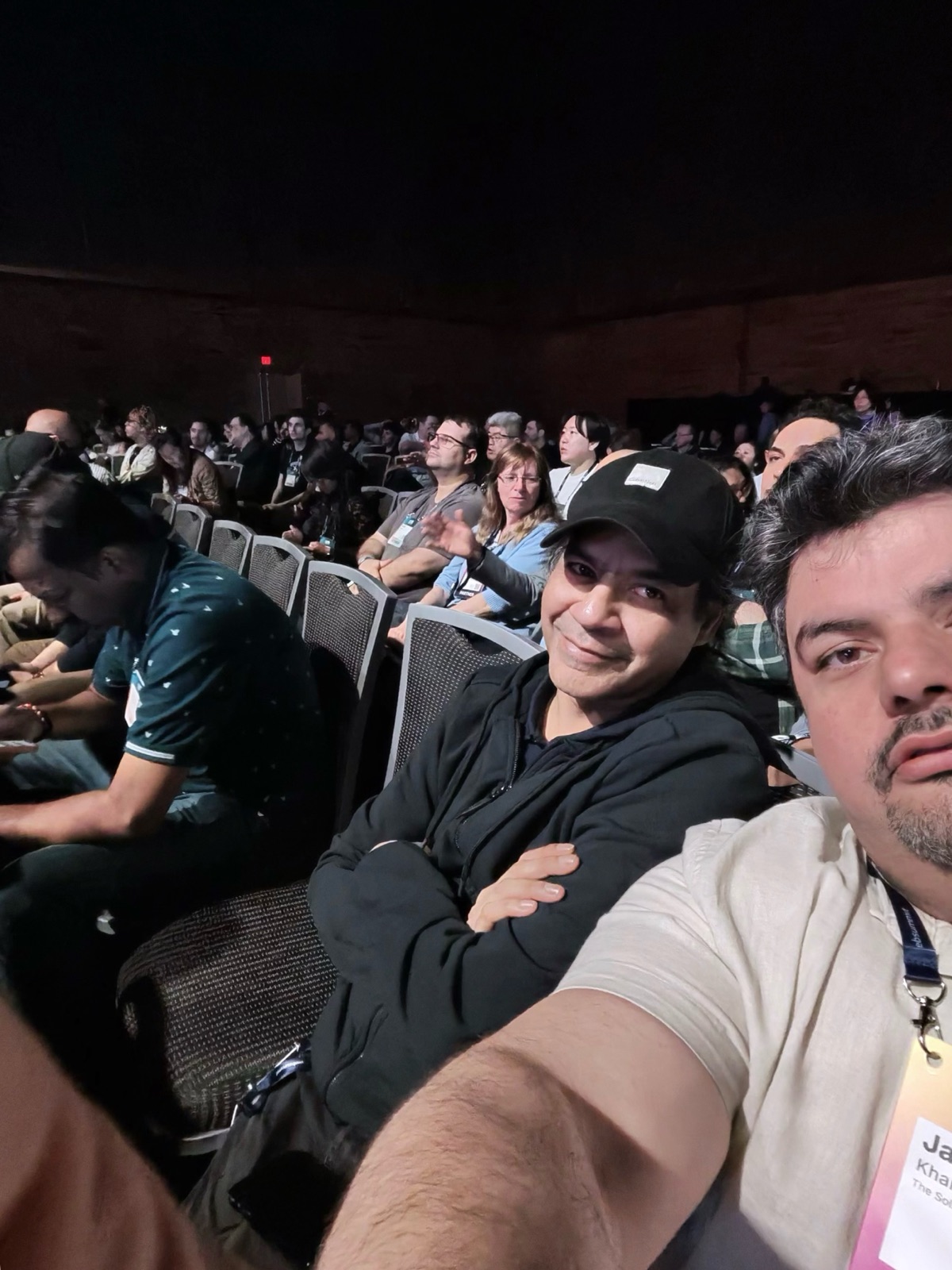
Ten Years Of Watching The Real Workflow
Before The Solutioners Labs, there was a cybersecurity practice. For more than a decade Jawad and Nasir’s team worked alongside law firms, banks, dealers, and accounting practices — the kinds of organizations where trust isn’t a marketing line, it is the entire business.
That decade taught them something most technology vendors never get to see: the real workflow. Not the workflow on the slide deck. The workflow at 4:50 p.m. on a Friday, when the deal needs to close and the partner is on a plane. The little gaps between systems. The compliance pressure sitting quietly behind every decision.
"You can’t architect for regulated work from the outside," Jawad says, standing near a coffee cart at the back of the AI Summit track. "You can wrap it. You can bolt onto it. But you can’t build for it until you’ve lived inside it long enough to understand what people actually do when the clock is ticking."

Then Commercial AI Arrived
Almost overnight, professionals at the firms they had spent a decade defending began pulling consumer AI tools into their day. Drafting client memos. Summarizing privileged correspondence. Pasting financial data into chat windows that were never designed for any of it.
From the outside, it looked like productivity. From where Jawad and Nasir stood — inside the compliance perimeters of those firms — it looked like a privacy problem and an ethics problem waiting to surface.
"The professionals weren’t being reckless," Nasir says. "They were being efficient. People do this with every new tool. The issue isn’t the user. The issue is that the tool, as shipped, doesn’t belong inside the building."
That observation is the founding story.
Active, Not Artificial
The Solutioners Labs was built in response. The thesis fits on one line: convert artificial intelligence into active intelligence.
"Models that sit in a chat window are artificial," Jawad says. "Systems that understand your context, run inside your compliance perimeter, and do real work for you — that’s active."
The difference is more than a slogan. An artificial-intelligence chatbot is something you have to remember to use, paste things into, and check after the fact. An active-intelligence system runs in the background — watching the case file, the policy folder, the advisor’s book — and surfaces what matters without being asked. Crucially, it does that without the data ever leaving the firm’s regulatory envelope. No outbound API call to a model the firm doesn’t control. No quiet logging of privileged content. No off-perimeter inference.
That last part is non-negotiable for the customers they serve. A Canadian advisor cannot ship a client portfolio to a US-hosted chat assistant and expect to remain on the right side of provincial regulation. A litigation partner cannot drop a draft pleading into a black-box completion endpoint and still call the result confidential. The whole point of the architecture is that they don’t have to.
A Conference Catching Up
The room they are walking through is, in a way, catching up to them. The big sessions on Vancouver’s schedule this week put the word sovereignty on the marquee without irony. Canada’s first Minister of Artificial Intelligence and Digital Innovation, Evan Solomon, takes Centre Stage with Cohere’s Joelle Pineau for a panel titled "AI for All: Canada’s AI Moment." B.C. Premier David Eby joins a separate panel on growing the province’s tech sector. The week’s biggest geopolitical announcement is the Canada–Germany Digital Alliance, signed in the building between sessions: a joint commitment on AI, digital sovereignty, infrastructure, and quantum.
The opening keynotes frame the whole conference as a single question: who owns the future? Who owns the models, the compute, the training data, the inference path. Three years ago that question was niche. This year it is the headline.
"We have spent two years arguing about model placement," Nasir says, watching the crowd thin between sessions. "Where the model lives. Whose perimeter it sits in. Whose data it can see. It is a strange feeling to look around the floor this week and find that everyone is finally having the same argument."
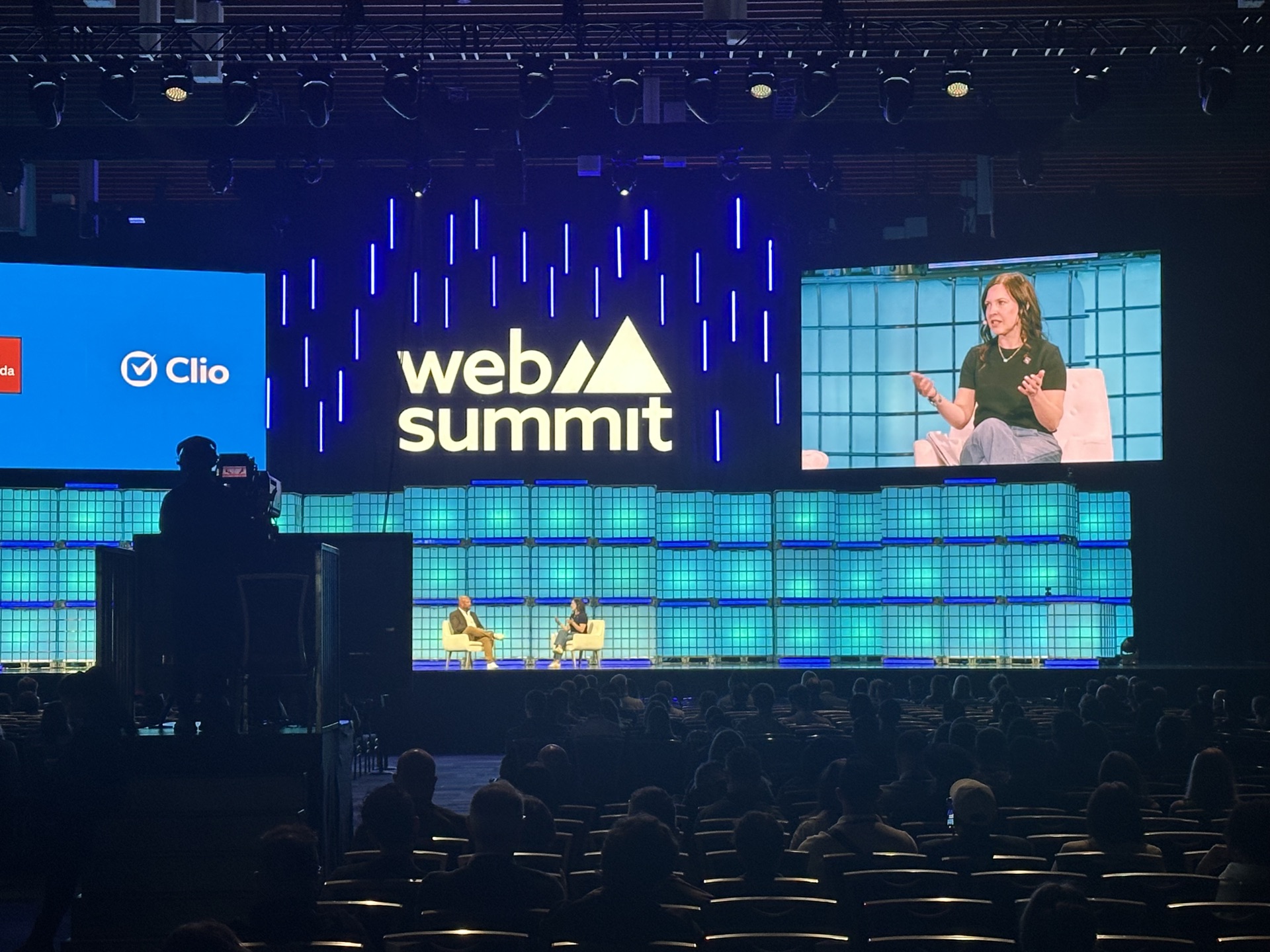
What That Looks Like In Practice
What The Solutioners Labs is actually building reads less like an AI product and more like back-office plumbing with a model threaded through it. A connector layer talks to the systems the firm already pays for — the back-office, the document management system, the CRM, the email archive. A sovereign model runs on infrastructure the firm itself can audit. An orchestration layer turns the model’s reasoning into concrete actions: draft this memo, surface this anomaly, flag this exception, suggest this rebalancing.
None of it is glamorous. None of it photographs well on a conference stage. That, Jawad and Nasir argue, is the point.
"Conference AI is built to demo," Jawad says. "Regulated AI is built to disappear into the work. The day a partner stops noticing the system is the day it has earned its keep."
The Quiet Bet
The real bet The Solutioners Labs is making is on the unfashionable kind of patience. The bet is that the firms who quietly built the boring infrastructure underneath the wow demos will be the ones still standing when the regulators show up. That the dealer who needs to scale tens of thousands of active client accounts across three regulatory codes will pick the platform that never requires a single confidential document to leave the building. That the law partner trying to keep three jurisdictions of privilege intact will choose the system whose architects spent a decade understanding what privilege actually is.
In Vancouver this week, that bet does not look as contrarian as it did a year ago. The hallway conversations have started to circle the same hard questions. The decks have started to use the same words.
"We don’t need to be the loudest company at the conference," Nasir says, as the harbour breeze picks up off the seawall. "We need to be the company that’s still standing when the regulators show up. That is a different optimization."
The clouds are moving. The mountains are sharper now. The second day of the second edition of Web Summit Vancouver is starting.
Related coverage

world · Wed, Jun 24, 8:27 PM
Thousands of Canadian Soccer Fans March to BC Place
world · Wed, Jun 24, 8:27 PM
Thousands of Fans March Toward BC Place for Canada World Cup Match

sports · Wed, Jun 24, 8:15 PM
Canadian Midfielder Ismaël Koné Welcomed by Fans in Vancouver

world · Wed, Jun 24, 6:11 PM
Thousands of Canadian Fans March in Vancouver for World Cup Match

world · Tue, Jun 23, 7:49 PM
Canadian Fans Paint Vancouver Red Ahead of Switzerland World Cup Match
world · Mon, Jun 22, 5:54 PM
Eight boats wash ashore in Vancouver after windstorm
sports · Sat, Jun 20, 9:21 PM
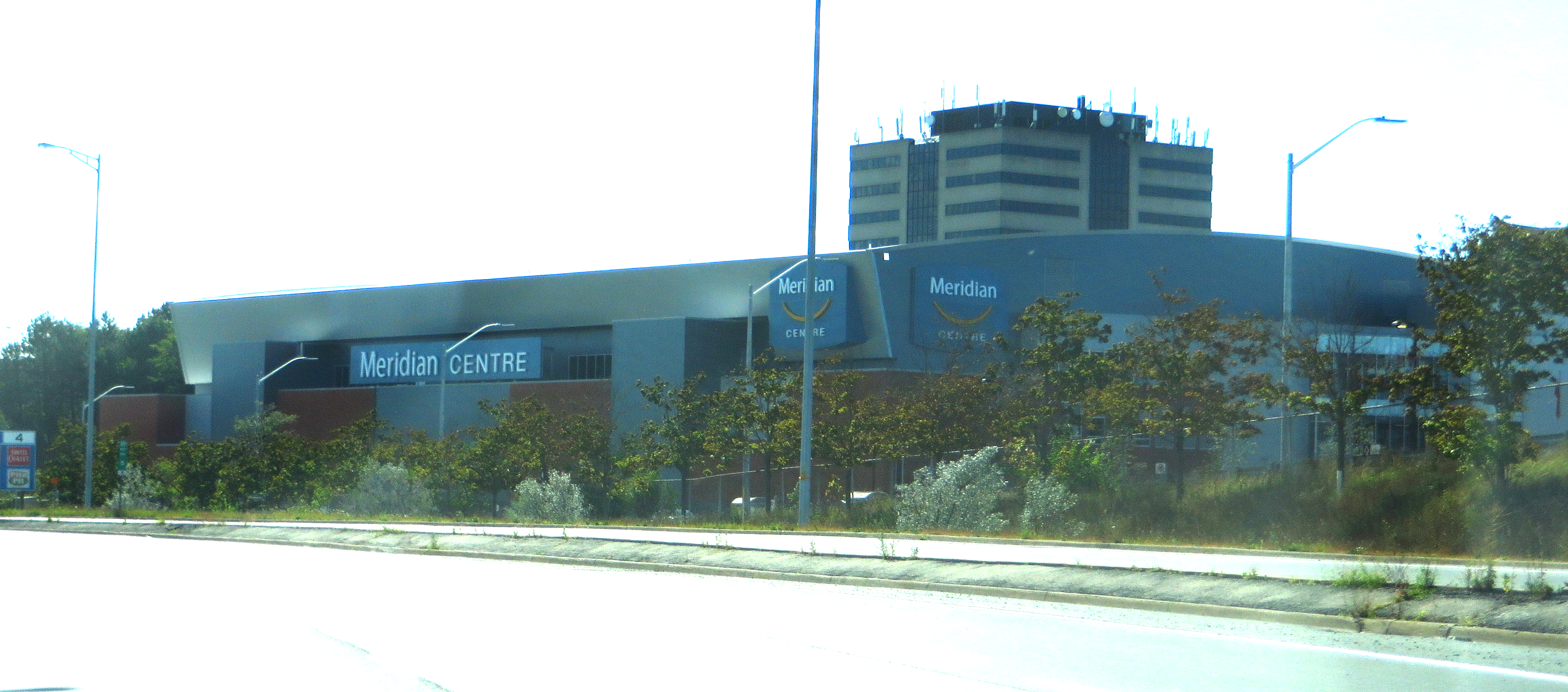
Vancouver Bandits Defeat Brampton Honey Badgers in CEBL Match

world · Fri, Jun 19, 8:31 PM
Canada Records First World Cup Finals Win With Victory Over Qatar
world · Fri, Jun 19, 7:45 PM
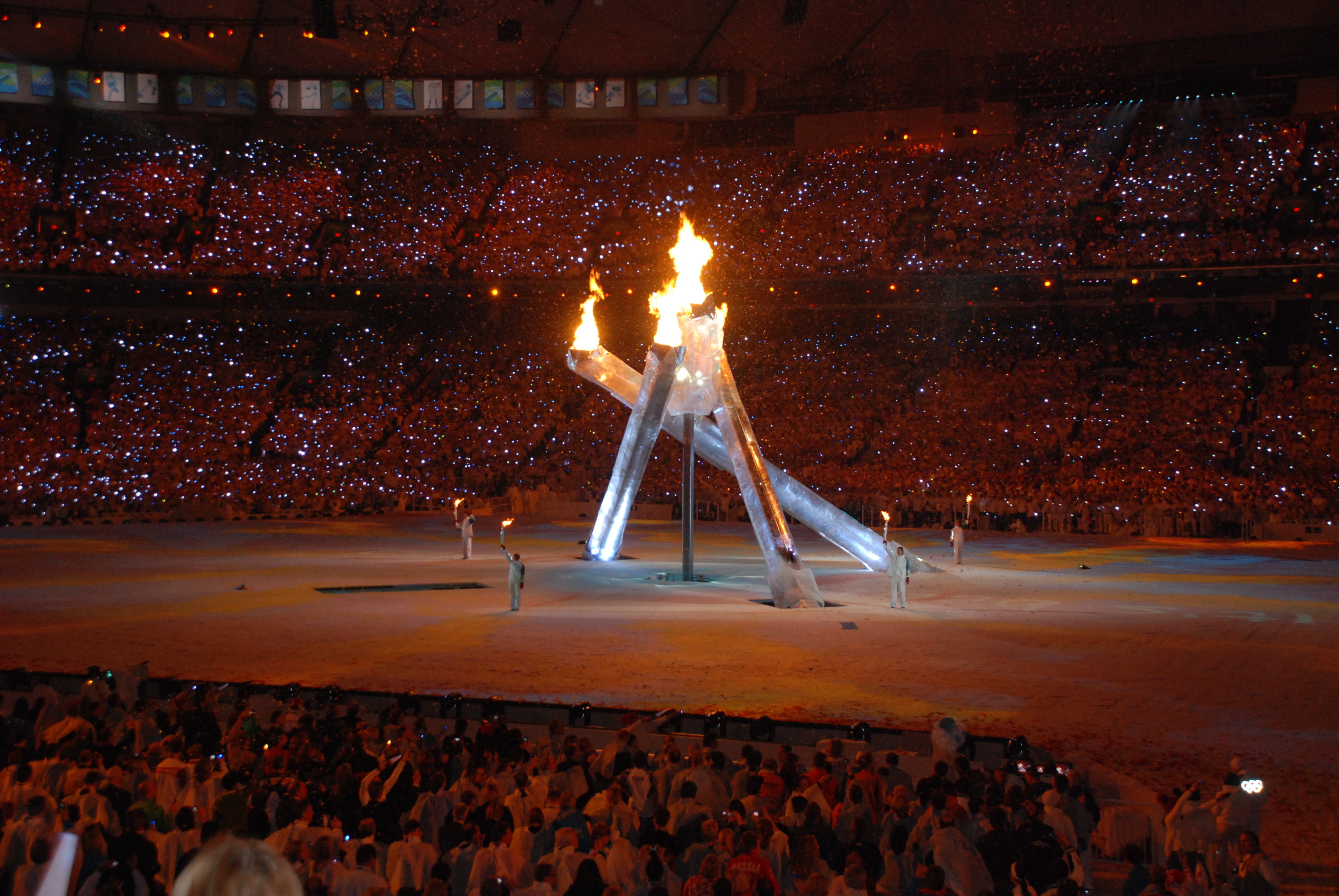
Vancouver FIFA Official Highlights Canadian Pride Ahead of 2026 World Cup
world · Fri, Jun 19, 6:00 PM
Canada Secures First World Cup Win With 6-0 Victory Over Qatar
world · Fri, Jun 19, 9:37 AM
Canada Defeats Qatar 6-0 for First World Cup Win
world · Fri, Jun 19, 9:02 AM
Canadian Midfielder Ismaël Koné Suffers Severe Leg Fracture at World Cup
world · Fri, Jun 19, 6:40 AM
Canada Defeats Qatar 6-0 for First World Cup Victory

world · Thu, Jun 18, 11:04 PM
Jonathan David Scores First World Cup Hat-Trick in Canada Win

sports · Thu, Jun 18, 10:50 PM
Vancouver Bandits Face Winnipeg Sea Bears in CEBL Matchup
world · Thu, Jun 18, 10:14 PM
Thousands of Canadian Fans March in Vancouver for World Cup Match

world · Thu, Jun 18, 3:19 PM
Canada Faces Qatar in World Cup Group B Match

world · Tue, Jun 16, 7:11 PM
Dave's Hot Chicken Opens First Vancouver Location

sports · Mon, Jun 15, 10:18 PM
Vancouver Bandits Secure Spot in CEBL Championship Weekend
world · Sun, Jun 14, 8:13 PM
Vancouver Completes Preparations for 2026 World Cup Matches

world · Fri, Jun 12, 11:04 AM
Fans Gather in Vancouver for 2026 FIFA World Cup Kickoff

world · Fri, Jun 12, 12:20 AM
Arts Club Theatre Presents 'Come From Away' in Vancouver

world · Mon, Jun 8, 6:21 AM
Canada Launches $2.3 Billion 'AI for All' National Strategy

sports · Sun, Jun 7, 1:21 AM
Grouse Mountain Unveils Massive Canadian Flag for World Cup

world · Sat, Jun 6, 8:29 PM
Grouse Mountain Unveils Record-Setting Canadian Flag for World Cup
world · Thu, Jun 4, 7:31 PM
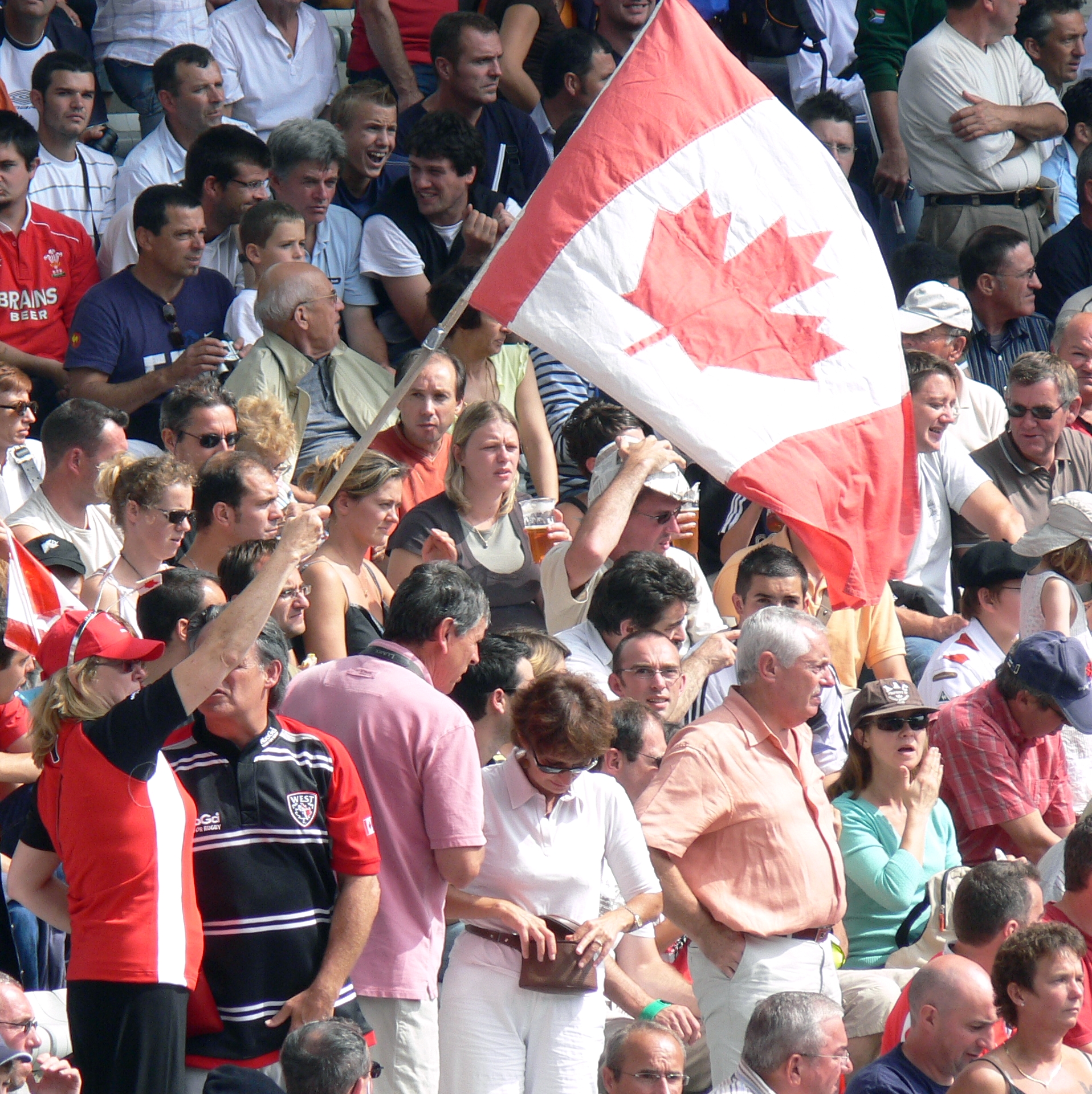
Record-Breaking Canadian Flag Unveiled on Grouse Mountain

world · Thu, Jun 4, 12:38 PM
Amazon Prime Launches Canadian-Based Series Off Campus

world · Wed, Jun 3, 4:34 PM
Grouse Mountain Unveils Massive Canadian Flag for 2026 World Cup

world · Mon, Jun 1, 6:41 AM
Macron Hosts Ninth Choose France Summit at Palace of Versailles

business · Fri, May 29, 1:07 AM
Emtar Technologies Wins Startup of the Year Award in Vancouver
More on video
Times Of India
LIVE: Trump Delivers Major Address At Faith & Freedom Summit Amid High Political Stakes
CBC News
Survey finds Canadian youth exposed to violent, gory content online, often unwittingly
Global News
Dozens of suspects, no Canadian citizens: Police release photos amid extortion investigation
Radio-Canada Info
À la découverte de Vancouver pendant la FIFA
CTV News
Champions of mental health in Canadian agriculture continue the mission
Moneycontrol
Moneycontrol Mutual Fund Summit 2026 | Impact to Innovation | Global Opportunities & Wealth Creation
Moneycontrol
Moneycontrol Mutual Fund Summit 2026 | The Future of Investing
WION
PAX Silica Summit: Over 30 Economies Back AI Opportunity Declaration | WION
Reuters
LIVE: NATO's Rutte speaks in Washington, D.C., ahead of Ankara summit
CBC Sports
Canadian Badminton champion Victor Lai plays 2 truths & a lie
CTV News
Vancouver Island resident asks Canadians to sing anthem on Canada Day
CTV News
Jubilant Canadian fans celebrate World Cup win | CTV Your Morning Vancouver for June 19, 2026
CTV News
‘The pride we feel to be Canadian’: Vancouver FIFA committee lead
Fox Soccer
Jesse Marsch is HYPING up the Canadian crowd in Vancouver 🇨🇦
CNBC TV18
G7 Summit: Canadian PM Carney Opens Up On Chinese Investment In Canada And Dealing With Trump | N18V
France 24 English
AI and tech sovereignty top last day of G7 summit in Evian • FRANCE 24 English
Mirror Now
G7 Summit: Canadian PM Mark Carney Had 'Good Discussion' With Donald Trump Despite Direct Meeting?
India Today
India–Canada Relations Boosted | G20 Deadline for CEPA Deal #pmmodi #g7summit2026 #canadianpm
Mirror Now
Canadian Prime Minister Carney Arrives In Geneva Ahead Of G7 Summit In France | Watch Video
AFP News Agency
Canadian PM Carney arrives for the G7 summit in Evian | AFP