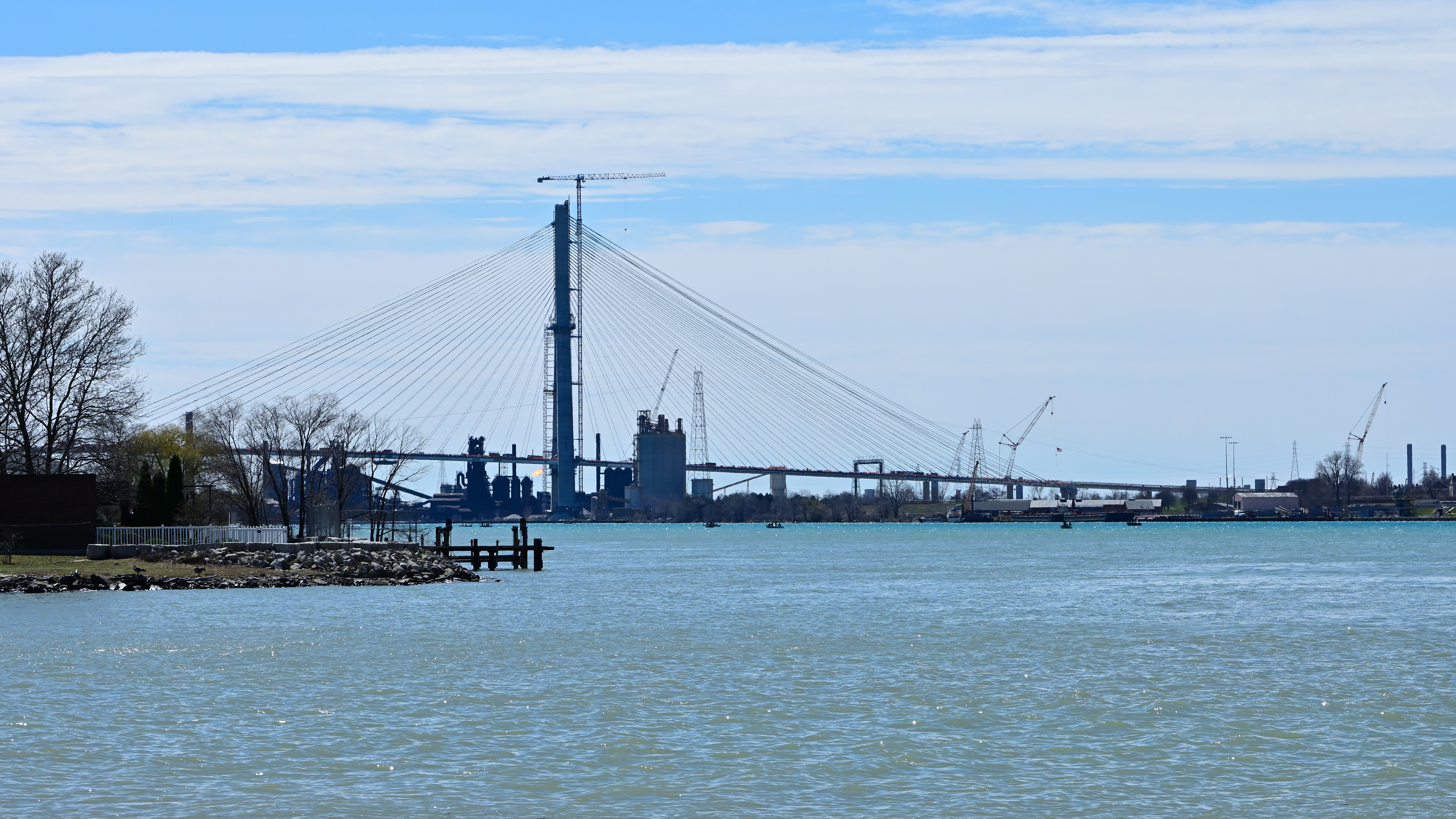
Prime Minister Mark Carney said Thursday that Canada will split half of the Gordie Howe International Bridge’s net revenue with the U.S. [1].
The clarification follows conflicting reports regarding how toll revenues will be handled for the crossing linking Windsor, Ontario, and Detroit, Michigan. The agreement affects the financial return on a project with a construction cost of $4.7 billion [2].
Carney addressed the confusion surrounding the terms of the revenue-sharing deal during remarks on Thursday. He said that for the first 15 years of operation, Canada will split 50% of the net revenue with an economic development fund established and solely controlled by the U.S. government [1].
"Could I have explained it better? … Yeah, I could have," Carney said [3].
The Prime Minister's statement aims to resolve a contradiction in previous reporting. Some earlier accounts suggested that Canada would not share any revenues from the bridge until the country had recouped its initial investment [4]. This would mean revenue sharing was deferred until the debt was repaid, a detail that contrasts with the 15-year fixed split Carney described this week.
The Gordie Howe International Bridge is a critical piece of infrastructure for trade between the two nations. Because the U.S. government controls the recipient fund, the deal ensures a direct flow of capital into American economic development projects for over a decade [1].
Carney's move to clarify the timeline and the percentage of the split comes as the project nears operational status. The 15-year window establishes a clear expiration date for the current revenue-sharing arrangement, regardless of the total debt repayment status [1].
“"Could I have explained it better? … Yeah, I could have."”
The clarification indicates that the revenue-sharing agreement is a fixed-term obligation rather than one contingent upon Canada's debt recovery. By confirming a 15-year window and a 50% split, the administration is acknowledging a specific financial commitment to a U.S.-controlled entity, which may face scrutiny regarding the long-term fiscal impact on Canadian taxpayers given the bridge's multi-billion dollar cost.


