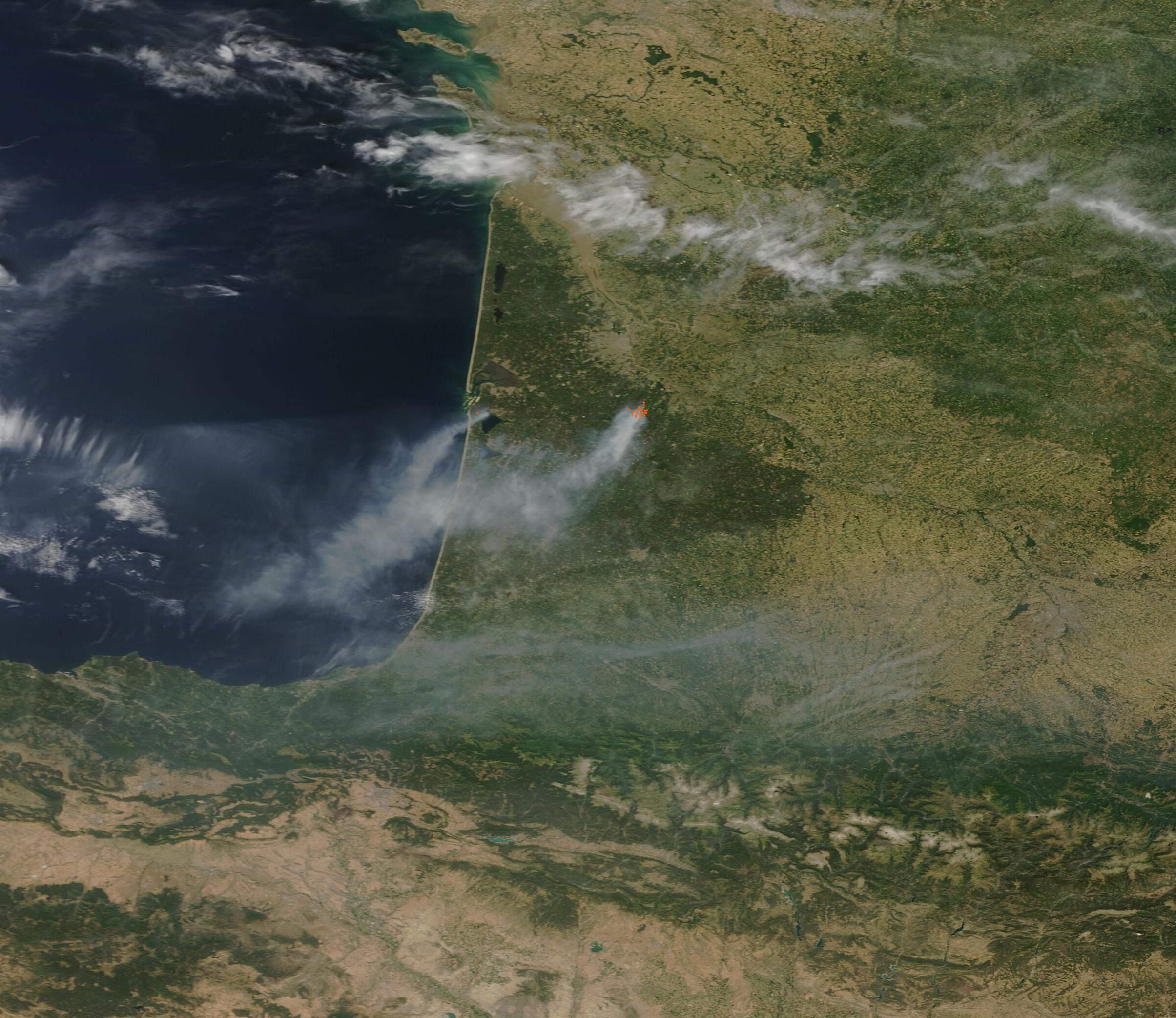
Massive wildfires in France's Bordeaux region have forced more than 300,000 people to flee their homes [1].
The scale of the evacuation marks the largest of its kind in the country's history. The disaster has prompted President Emmanuel Macron to call a crisis meeting to address the escalating emergency as flames spread into neighboring Spain [1].
Dr. Melissa Sterry, Founding Director of Panarchic Codex®, describes the situation as a systemic phenomenon. She said the fires are the result of a convergence between modern climate change and historical landscape engineering [2].
According to Sterry, 19th-century plantation forestry created vast areas of highly combustible forests [2, 4]. These human-made landscapes, combined with intensifying heat and drought driven by climate change, have created an environment where fires can easily ignite and spread [2, 4].
Sterry said expanding human activity further increases the opportunities for ignition. This combination allows the wildfires to become autonomous systems that are difficult to contain [2, 4].
The crisis highlights the vulnerability of regions where historical land management practices clash with current environmental shifts. The Bordeaux region remains a focal point of the disaster as authorities struggle to manage the intersection of human activity, and a volatile landscape [2, 3].
“More than 300,000 people forced to flee”
This event demonstrates that wildfires are not merely weather-driven accidents but are amplified by 'legacy' land-use decisions. The use of 19th-century plantation forestry created a fuel-heavy environment that, when paired with 2026 climate extremes, transforms manageable fires into systemic disasters. This suggests that future disaster mitigation must address historical forestry patterns alongside carbon reduction.