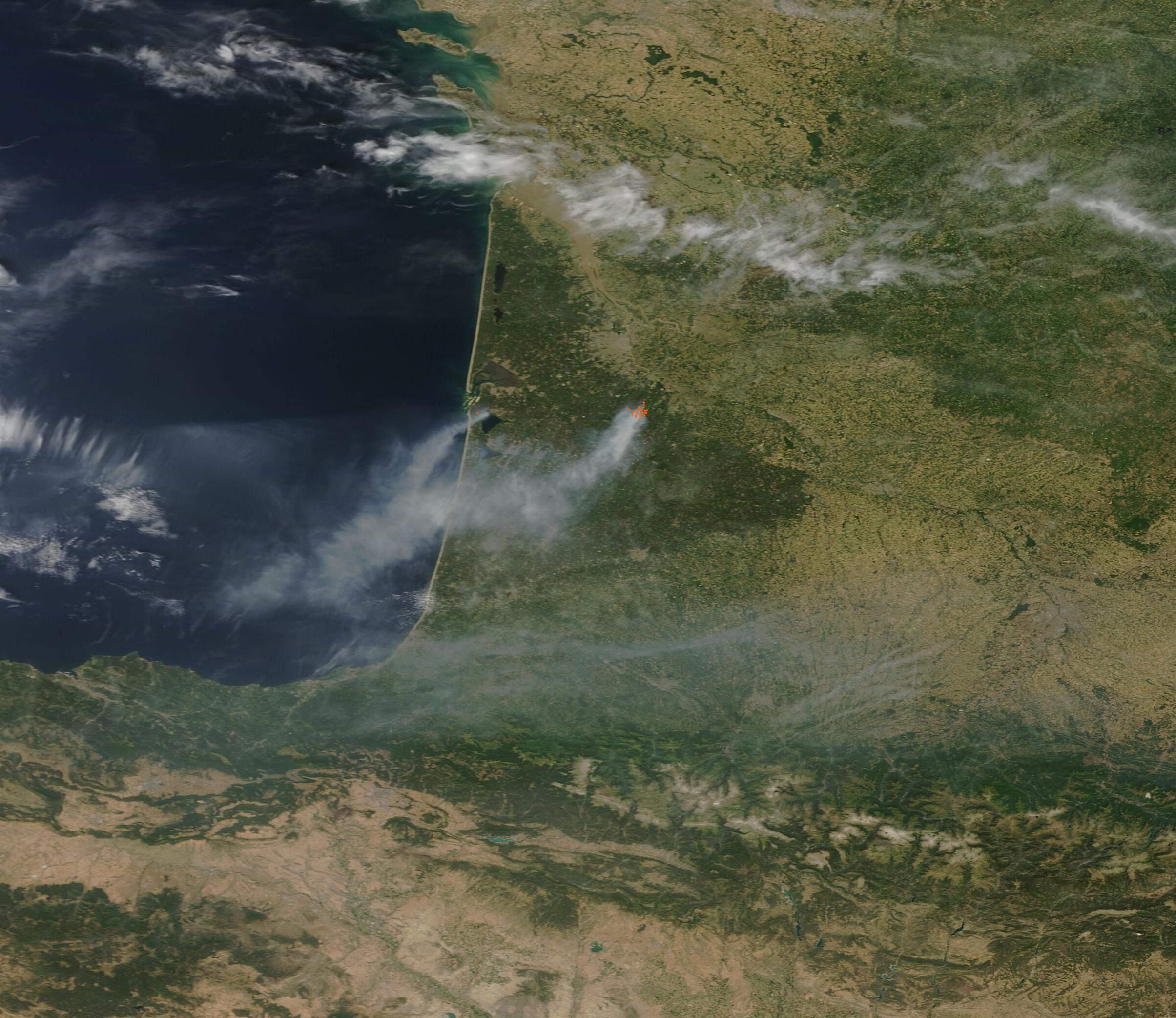
French authorities ordered mass evacuations in the southwestern Gironde and Landes regions on July 24, 2026, as wildfires threatened homes and tourist sites [1].
These evacuations highlight the increasing volatility of European summers, where extreme heat transforms coastal landscapes into high-risk zones for rapid-fire spread. The scale of the displacement disrupts both local residency and the peak summer tourism industry in the region.
The fires primarily impacted the Atlantic coast, including the Cap Ferret peninsula [2]. Local officials and the French government said residents and visitors should leave campsites and residential areas as the blazes intensified [1].
Approximately 40,000 people were evacuated from southwest France [3]. On a broader scale, the regional crisis extends across borders, with over 80,000 people evacuated across France and Spain combined [4].
Emergency responders focused efforts on the Gironde and Landes departments, where the terrain and vegetation contributed to the speed of the fires [2]. A severe heatwave created tinder-dry conditions that allowed the wildfires to ignite and spread rapidly across the landscape [5].
Firefighters and emergency vehicles deployed to the Atlantic coast to create firebreaks and protect critical infrastructure [2]. The situation forced many evacuees to leave their homes via cars and boats to escape the advancing flames [2].
Spanish authorities also declared an emergency as fires in their territory merged with those in France [6]. The coordinated response between the two nations remains critical as weather conditions continue to favor fire growth [6].
“Approximately 40,000 people were evacuated from southwest France.”
The simultaneous ignition of massive blazes in France and Spain suggests a systemic failure of regional moisture levels due to prolonged heatwaves. By forcing the evacuation of tens of thousands of people, these events demonstrate that traditional firefighting infrastructure is struggling to keep pace with the speed of 'megafires' driven by extreme climate anomalies.