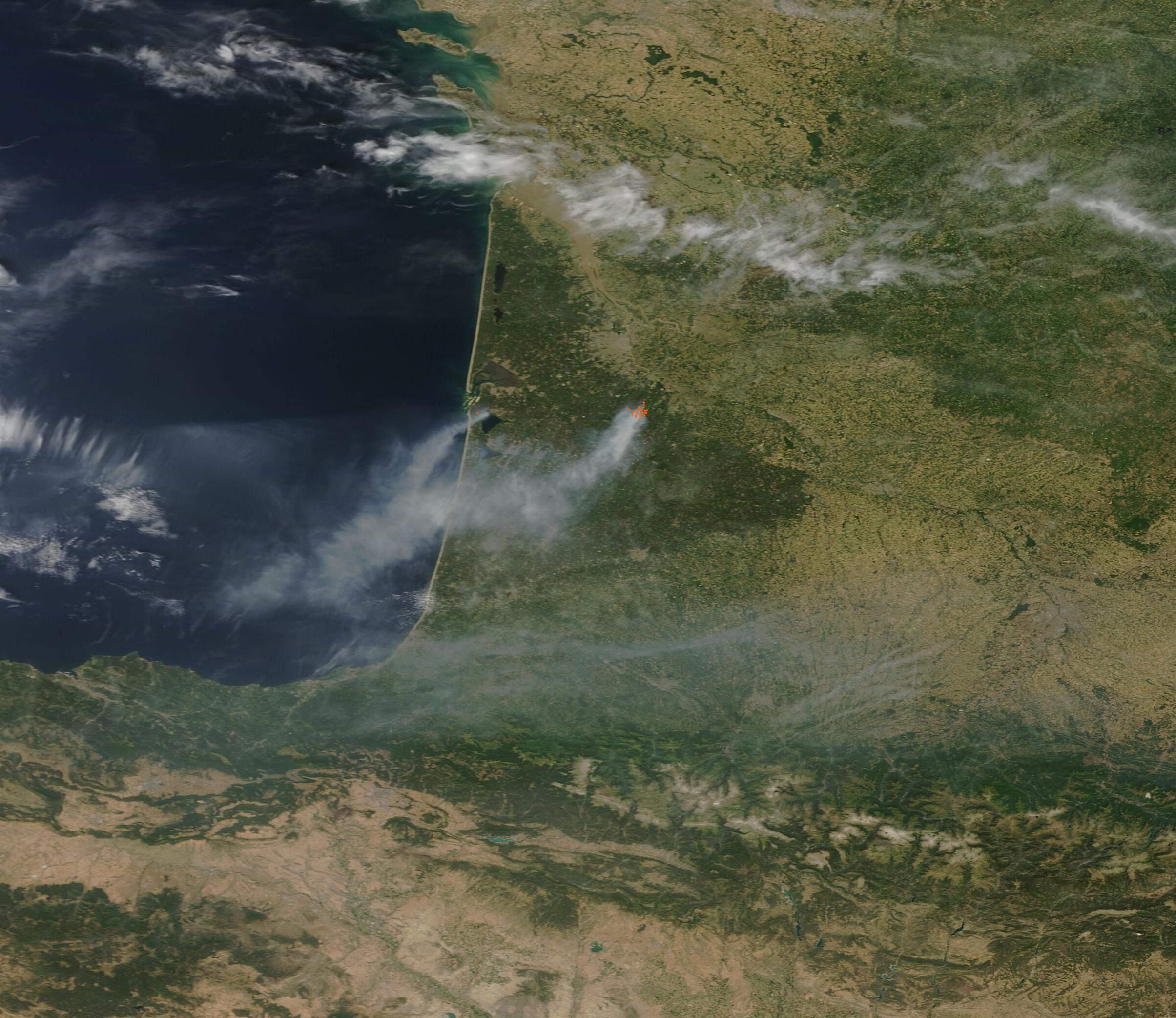
Massive wildfires are burning across southwest France and central Spain, forcing hundreds of thousands of residents to flee their homes.
The scale of the blazes highlights the increasing vulnerability of Southern Europe to extreme heat and dry conditions. Officials said climate change is amplifying the frequency and intensity of these events, turning the region into a tinderbox.
In France, authorities have evacuated 220,000 people [1]. The fires have advanced toward the city of Bordeaux, creating a critical situation for local residents and emergency services. French Interior Minister Gérald Darmanin said, "We are facing an unprecedented situation; the flames are now within 15 km of Bordeaux" [2].
Across the border in central Spain, the situation is equally dire. Fires are raging through regions around Zaragoza and Lleida, where 75,000 Spaniards were ordered to leave their homes [1]. Firefighters continue to battle the blazes as extreme weather persists.
Spanish Prime Minister Pedro Sánchez used the crisis to call for systemic policy changes. He said, "We must act now on climate change; this disaster shows the urgency of a European climate plan" [2].
Emergency crews from both nations are working to contain the perimeter of the fires. The combination of high temperatures and low humidity has made containment difficult, as the wind continues to push flames toward populated areas.
“"We are facing an unprecedented situation; the flames are now within 15 km of Bordeaux."”
The simultaneous eruption of large-scale fires in France and Spain suggests a regional climate pattern rather than isolated incidents. By linking the immediate disaster to the need for a coordinated European climate plan, leadership is shifting the conversation from emergency management to long-term environmental policy and infrastructure adaptation.


