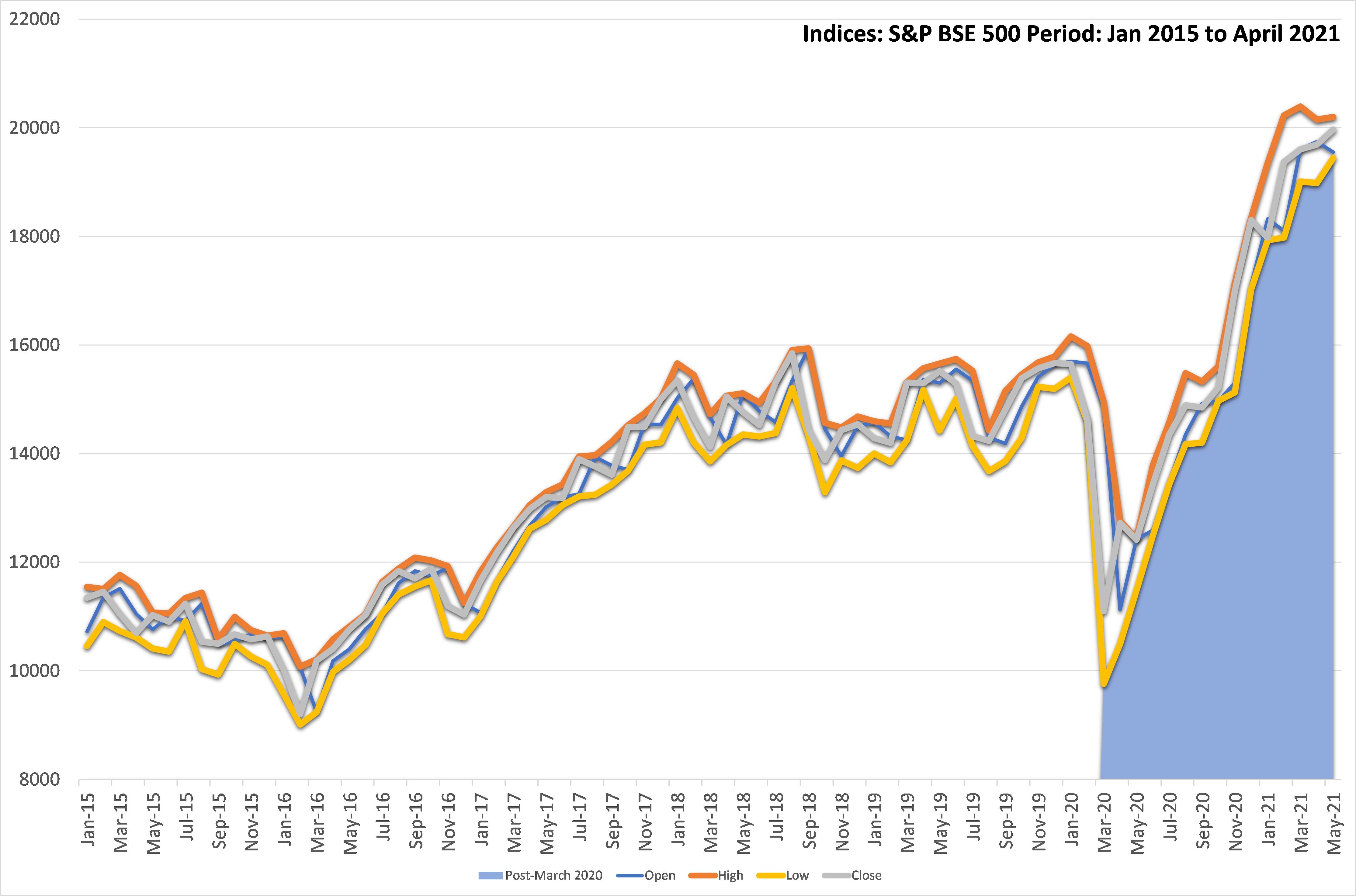
Indian stock market indices rose Thursday, with the Sensex and Nifty both posting gains as investors favored realty and energy stocks.
This movement indicates a shift in investor confidence toward domestic infrastructure and real estate, even as global headwinds affect other sectors. The divergence between high-growth industrial stocks and struggling consumer goods suggests a volatile but optimistic domestic outlook.
The Sensex showed varying levels of growth throughout the session. One report indicated the index rose 105.92 points to 75,424.31 [1], while another recorded a higher increase of 292.55 points, bringing the index to 75,691.27 [3].
Similarly, the Nifty index remained above the 23,700 mark. Data showed the index climbing 64.40 points to 23,723.40 [2], though separate reporting placed the gain at 83.70 points, reaching 23,773.30 [4].
Market analysts said the upward trend was due to continued buying in the realty, infrastructure, and energy sectors [1], [5]. These sectors outperformed the broader market, providing the necessary momentum to keep the indices in positive territory.
However, the gains were not universal across all industries. Weakness in the information technology (IT) and fast-moving consumer goods (FMCG) sectors capped the overall growth of the indices [5]. The struggle in IT stocks suggests a cautious approach toward tech exports, while FMCG weakness may reflect shifting consumer spending patterns.
Trading activity took place across the Bombay Stock Exchange (BSE) and the National Stock Exchange (NSE) [1], [5]. The market's ability to maintain levels above 75,000 for the Sensex and 23,700 for the Nifty reflects a baseline of stability despite the sectoral contradictions.
“Sensex and Nifty indices climbed Thursday, driven by strong performance in infrastructure and realty sectors.”
The current market behavior highlights a strategic pivot by investors toward tangible assets and domestic development. By favoring realty and infrastructure over IT and FMCG, the market is signaling a bet on India's internal physical growth and industrialization rather than relying on global tech demand or immediate consumer retail recovery.