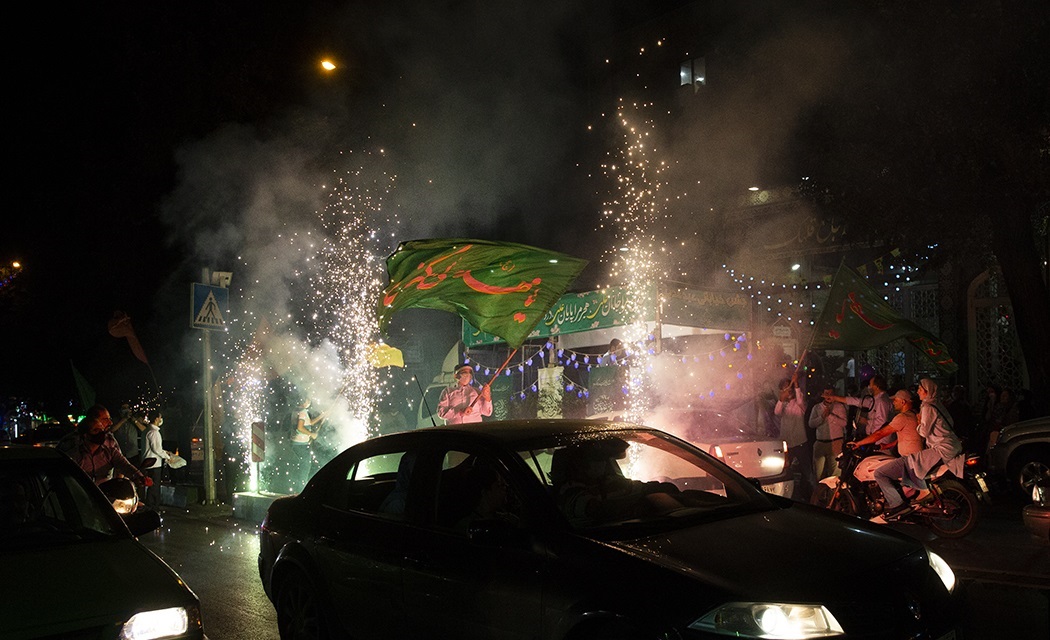
Iranian citizens gathered in large numbers across public streets and squares to celebrate Eid al-Ghadir [1].
The events served as a strategic display of internal stability. By blending religious rites with political messaging, the Iranian leadership sought to demonstrate regime resilience and national unity following a period of military confrontation [1].
These celebrations occurred several weeks [2] after a period of military tension and a fragile cease-fire that took place in early 2024 [1]. The timing of the gatherings in Tehran and other cities suggests an effort to pivot the public narrative toward cohesion and strength after the instability of the previous months.
Beyond the religious significance of the holiday, the events were used to introduce a newer generation of Iranian leadership to the public [1]. These figures appeared prominently during the festivities, signaling a transition or expansion in the regime's governing structure. The visibility of these new leaders is intended to project a sense of continuity and future-proofing for the state's political apparatus [1].
The gatherings were characterized by large crowds chanting religious slogans and participating in traditional observances [1]. The integration of political messages into the religious celebration allowed the leadership to frame the new generation of officials as part of a unified, spiritually guided front. This approach aims to consolidate support among the populace, while projecting an image of an unbreakable domestic front to international observers [1].
“Iranian citizens gathered in large numbers across public streets and squares to celebrate Eid al-Ghadir.”
The blending of a major religious holiday with the introduction of new political figures suggests that the Iranian leadership is prioritizing a visible transition of power to ensure stability. By anchoring this transition in the spiritual legitimacy of Eid al-Ghadir, the regime is attempting to mitigate the political fallout from the military tensions of early 2024 and present a unified front to both domestic critics and foreign adversaries.