
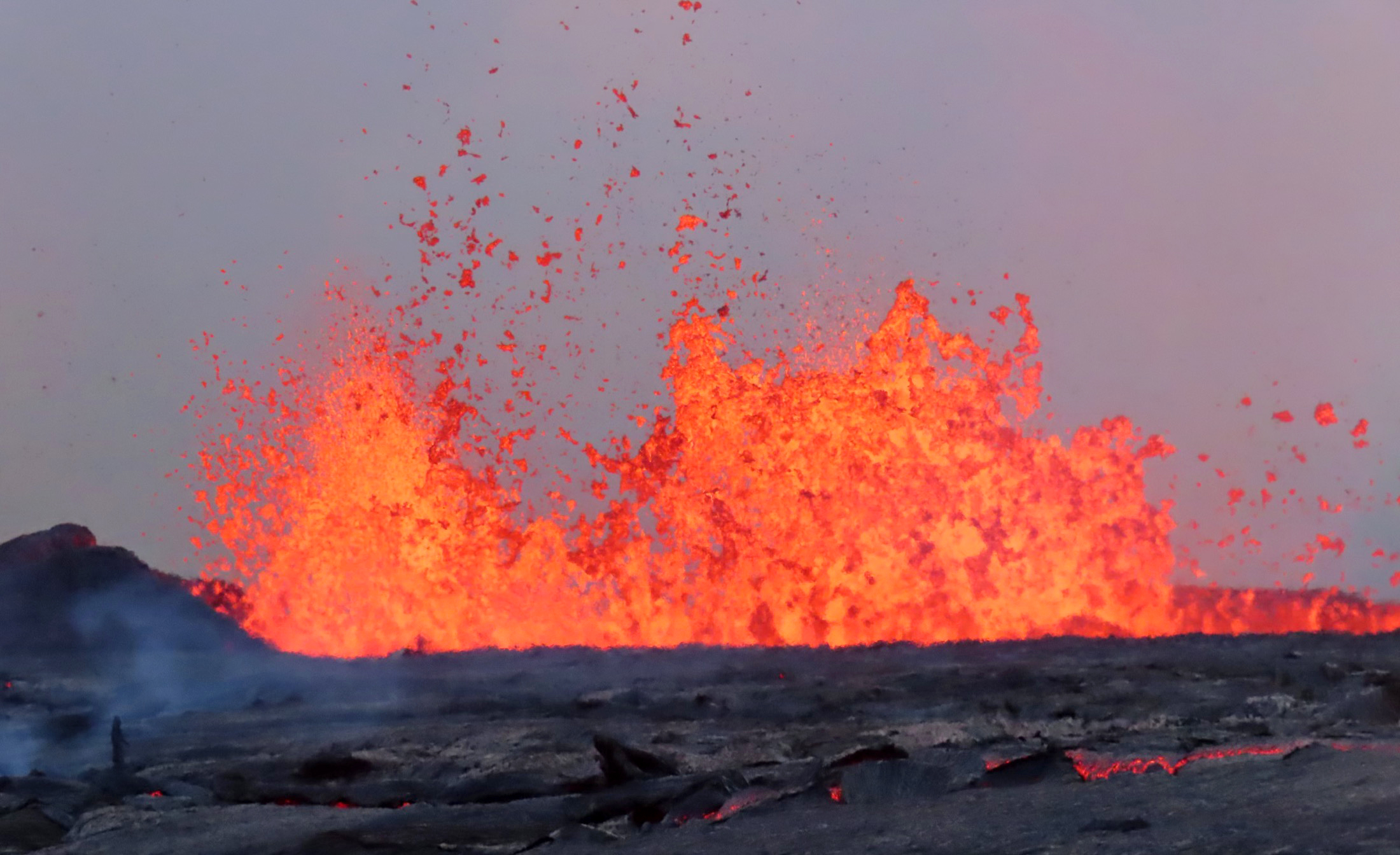
USGS scientists and camera operators recorded a small whirlwind forming over the Kilauea volcano on Monday, June 1, 2026 [1, 2].
The event provides rare visual evidence of how volcanic materials interact with atmospheric conditions during an active eruption. Such vortices can influence how ash and debris are distributed around the eruption site.
The phenomenon is described as a "tephra devil," a short-lived vortex that occurs when low-density tephra is released into the air [1, 2, 3]. These materials can spin into whirlwinds under specific thermal and wind conditions, creating a tornado-like appearance [3].
Monitoring equipment from the U.S. Geological Survey captured the footage on the island of Hawaiʻi [1, 2]. The cameras recorded the vortex as it formed and dissipated over the volcanic landscape [1].
While the whirlwind appeared dramatic on camera, these tephra devils are typically small and transient [3]. They differ from larger meteorological tornadoes because they are driven by the intense heat and particulate matter of the eruption rather than broad storm systems [3].
USGS operators said they continue to monitor Kilauea for further activity [1, 2].
“A small whirlwind formed over the Kilauea volcano on Monday, June 1, 2026.”
The observation of a tephra devil highlights the complex fluid dynamics at play during volcanic events. By documenting these vortices, scientists can better understand the transport of volcanic particulates, which has implications for air quality and safety zones surrounding active eruptions.


