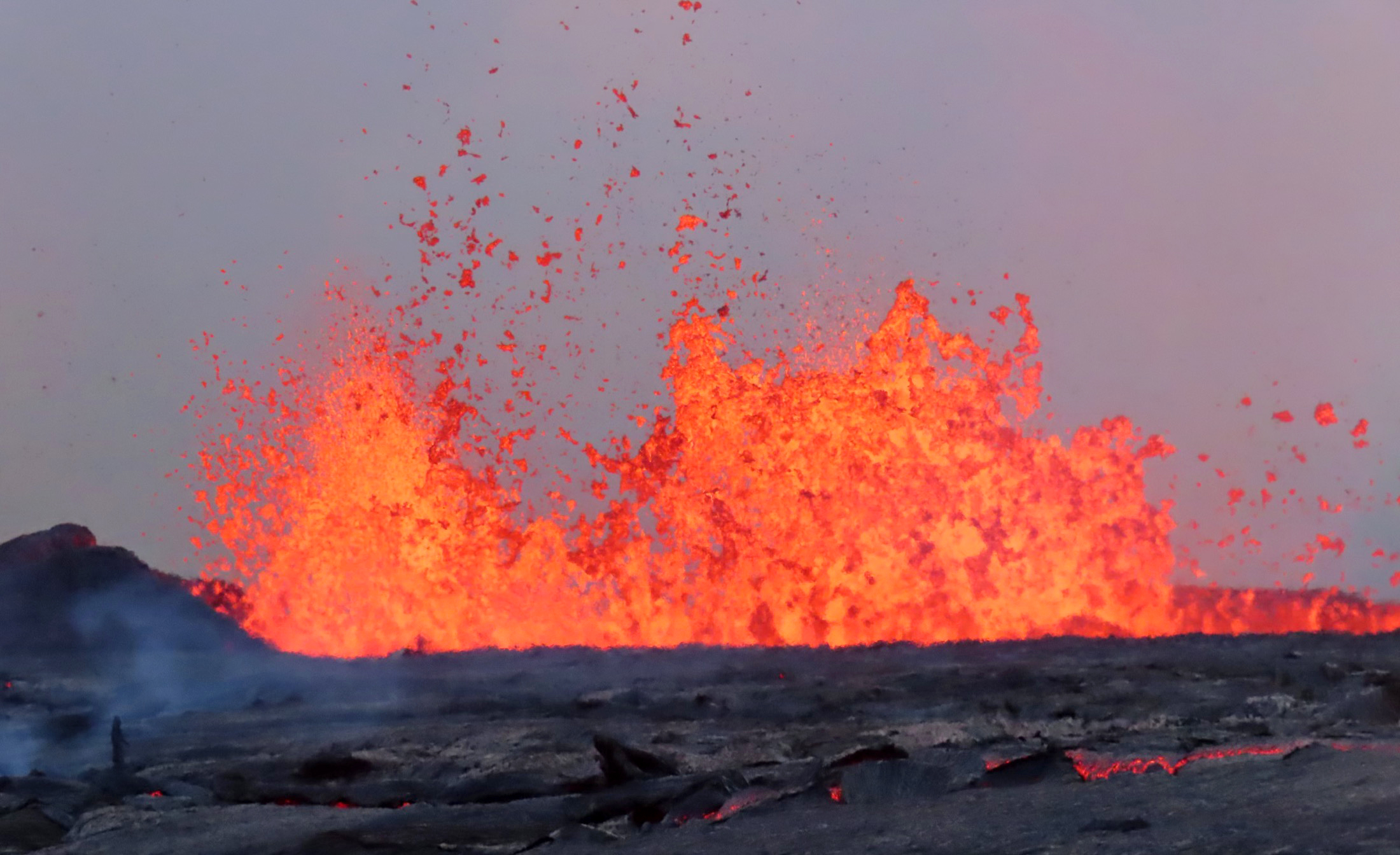
U.S. Geological Survey cameras captured a small whirlwind forming around the Kilauea volcano in Hawaii Volcanoes National Park on June 1, 2024 [4].
The footage provides a rare visual record of localized atmospheric disturbances occurring in immediate proximity to an active volcanic vent. Such events highlight the volatile interaction between extreme geothermal heat and surrounding air currents.
The whirlwind was observed on Monday, June 1, 2024 [4]. The monitoring equipment used to record the event was positioned approximately 2,000 feet from the volcano vent [3].
This atmospheric event occurred shortly before a new period of volcanic activity. The 46th eruptive episode of the volcano began at 8:17 a.m. HST on Tuesday morning, June 2, 2024 [1], [2].
Kilauea remains one of the most active volcanoes in the U.S. The USGS continues to monitor the site with a network of cameras and sensors to track lava movements and gas emissions. This specific footage captures the moment the air began to rotate, creating a brief but distinct vortex beside the crater rim.
While the whirlwind itself was small, the timing coincided with the onset of the 46th eruptive episode [1]. The transition from a localized wind event to a full eruptive state underscores the dynamic nature of the Hawaii Volcanoes National Park environment.
“USGS cameras captured a small whirlwind forming around the Kilauea volcano”
The formation of a whirlwind near a volcanic vent is typically caused by intense heat from the volcano warming the air rapidly, which then rises and creates a localized low-pressure zone that draws in surrounding air. When this occurs just before an eruptive episode, it illustrates the extreme thermal gradients present at the surface, providing scientists with visual data on how heat transfer affects the immediate atmosphere during the lead-up to an eruption.