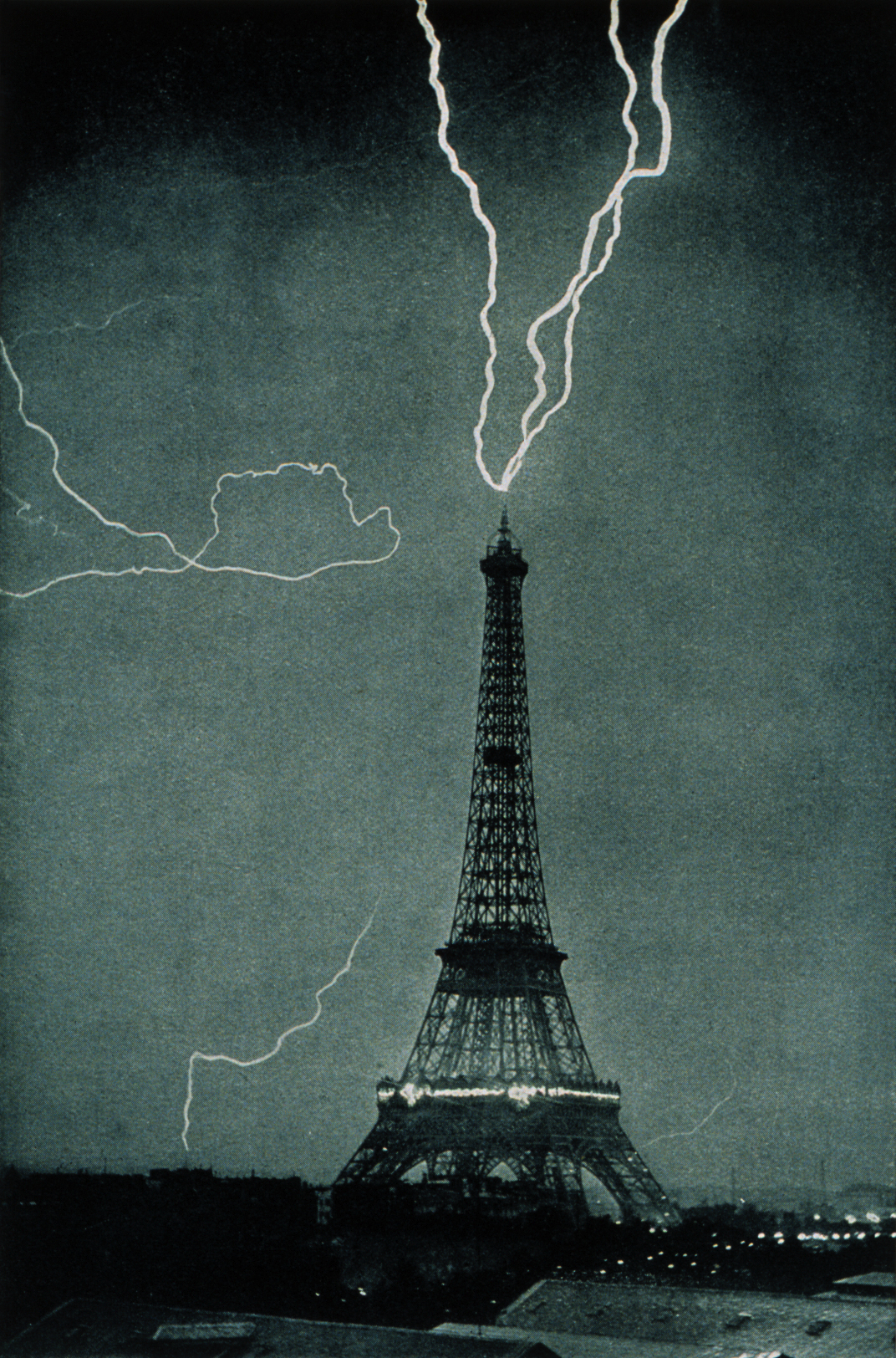
A massive bolt of lightning struck the Eiffel Tower on Saturday evening during a severe thunderstorm in Paris [1, 2].
The event highlights the volatility of weather patterns in Europe, where extreme heat often precedes violent electrical storms. This specific strike occurred as a thunderstorm moved over the city following a record-setting heatwave [1, 4].
Observers in the Trocadéro area captured the moment the lightning hit the iron structure [1, 2]. The tower, which stands as the tallest structure in the city, frequently acts as a lightning rod during such atmospheric disturbances [5].
Meteorological reports indicate that the intense electrical activity was a direct result of the storm system that developed after the heatwave [1, 4]. While the visual impact of the strike was dramatic, the tower is designed to handle such events safely [5].
Video footage of the incident circulated widely on social media, showing the bolt illuminating the Parisian skyline before striking the peak of the landmark [3, 4]. No injuries or structural damage were reported in the immediate aftermath of the storm [2, 6].
“A massive bolt of lightning struck the Eiffel Tower on Saturday evening”
The occurrence of severe thunderstorms immediately following record-breaking heatwaves is a characteristic of increasing atmospheric instability. In urban environments like Paris, tall metallic structures serve as primary conduits for lightning, mitigating the risk to surrounding pedestrians and buildings by directing the electrical discharge safely into the ground.

