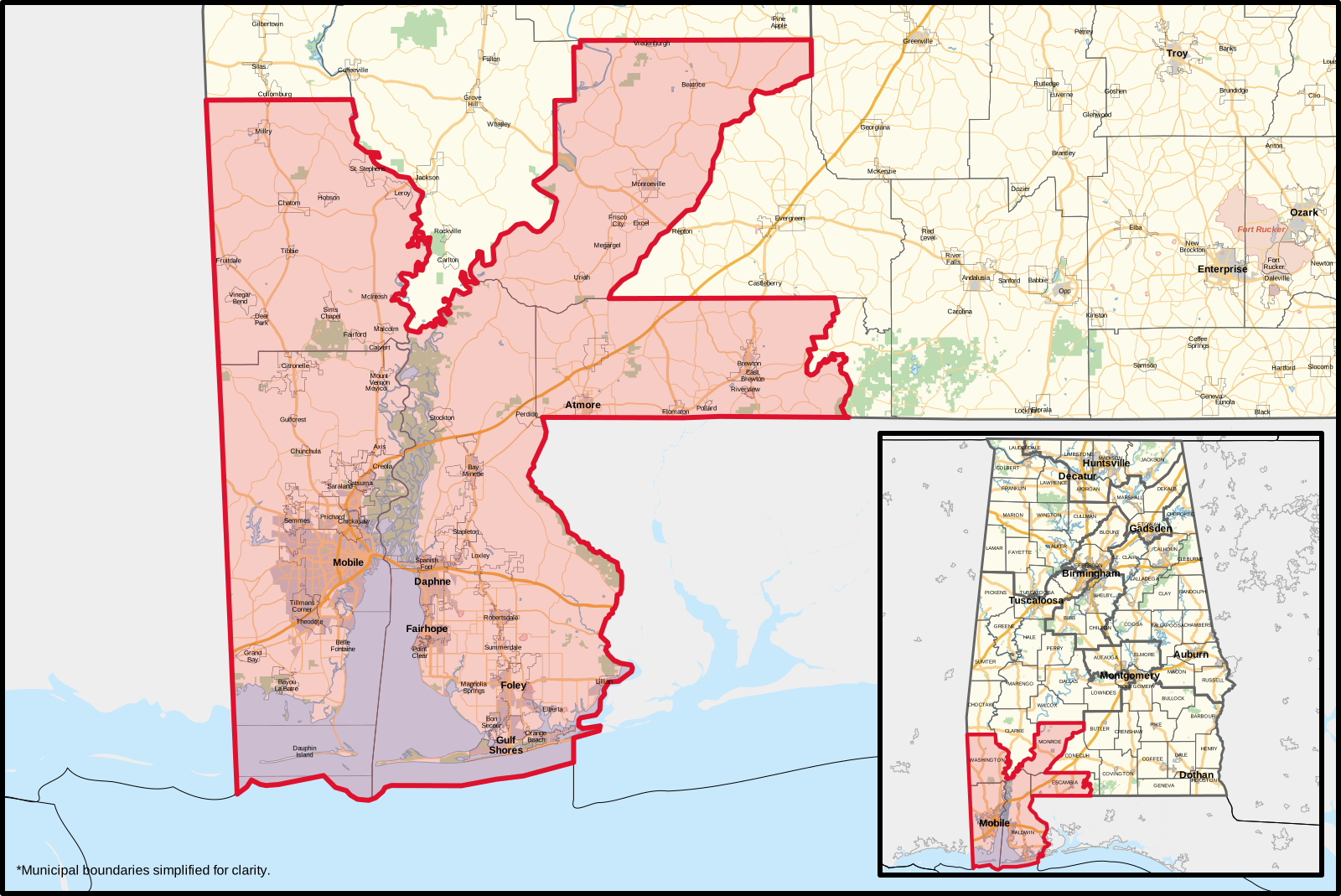
Federal courts and Black voters are challenging redistricting maps in the Southern U.S. that eliminate majority-Black districts.
These legal battles matter because the redrawing of electoral boundaries can determine the level of minority representation in Congress and influence the balance of power in the House.
Republican lawmakers have redrawn districts in states such as Louisiana and Alabama to protect their House majority [1, 4]. These efforts have sparked coordinated protests across the South as advocates argue the maps violate Section 2 of the Voting Rights Act [1, 5]. Critics said the new boundaries are designed to diminish the political influence of Black voters [1, 4].
In Alabama, a federal court blocked a map that removed a majority-Black district [2]. The ruling came amid a broader trend of legal challenges to the 2024-2025 redistricting cycle [3, 4].
Rep. Yvette Clarke (D-NY), chair of the Congressional Black Caucus, spoke on the implications of these changes. Clarke said the redistricting push is "devastating" for Black political representation [1].
Reports on the redistricting push surfaced on Sept. 17, 2025, highlighting concerns from Black voters about the long-term impact on their voting power [3, 4]. The conflict centers on whether the maps intentionally dilute the strength of minority blocs to ensure partisan gains [1, 6].
Lawmakers from both parties have been involved in the disputes, though the primary opposition has come from the Congressional Black Caucus and civil rights organizations. Demonstrations have swept through several Southern states to demand the protection of voting rights, and fair representation [5].
“"devastating" for Black political representation”
The conflict over Southern redistricting reflects a larger national struggle over the interpretation of the Voting Rights Act. By eliminating majority-Black districts, Republican-led legislatures aim to secure a durable House majority, while challengers argue this constitutes an illegal dilution of minority voting power. The outcome of these court cases will likely set a precedent for how racial demographics are weighed against partisan goals in future redistricting cycles.