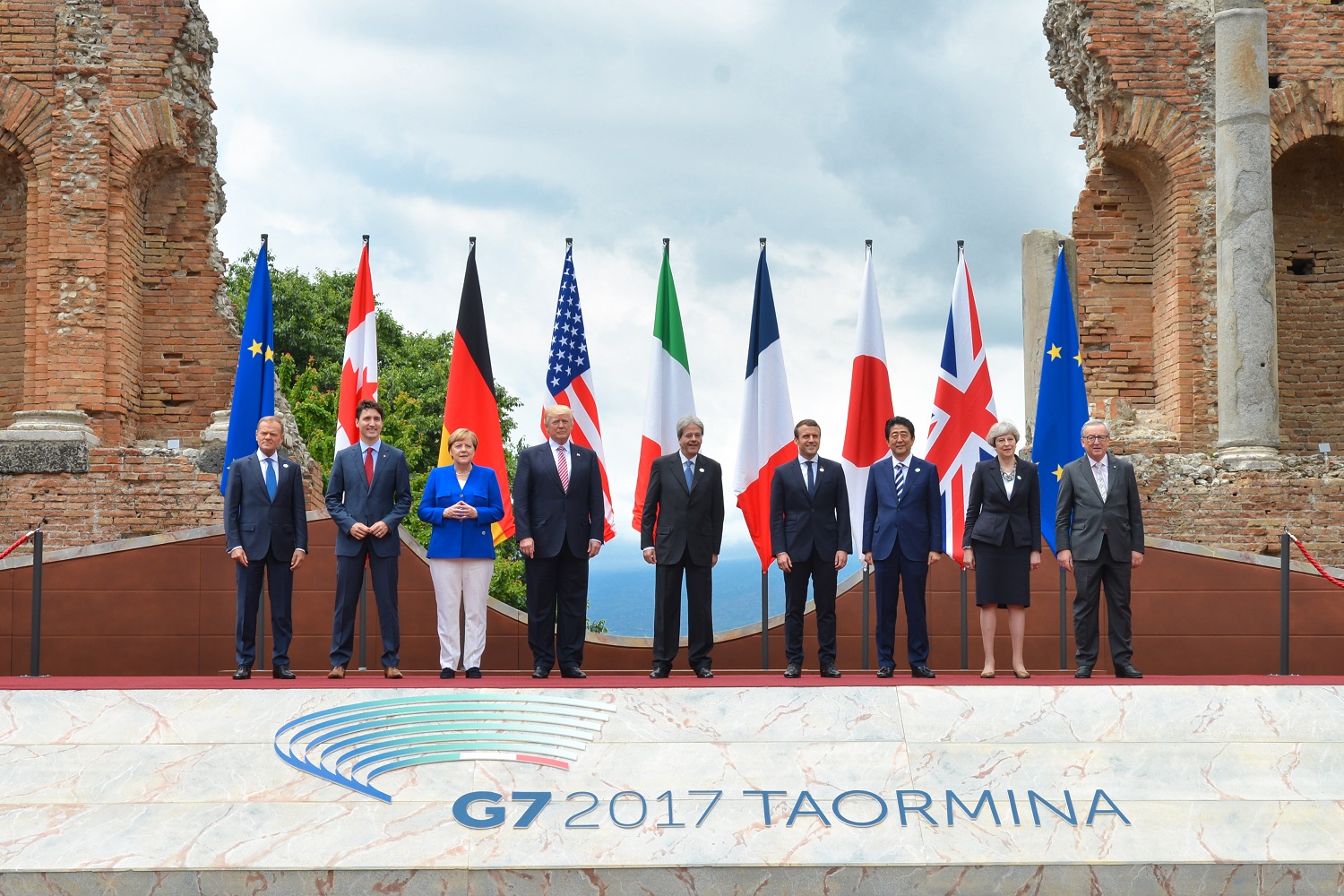
President Donald Trump announced an agreement to end the war with Iran and reopen the Strait of Hormuz during the G7 summit on June 15, 2026 [1].
The resolution of this conflict is critical for global energy markets and maritime security, as the Strait of Hormuz serves as a primary chokepoint for oil shipments. A stable agreement could reduce volatility in global fuel prices and ease tensions in a highly contested region.
The announcement took place in Evian-les-Bains, France [2]. While President Trump announced the agreement, some reports indicate the deal may be tentative [3]. Additionally, there are conflicting reports regarding the signing process, with some sources stating Vice President JD Vance will sign the deal [4].
Beyond the Iran agreement, the G7 summit serves as a forum for leaders to address the war in Ukraine and other geopolitical instabilities [1]. The gathering in France brings together the world's leading industrialized democracies to coordinate diplomatic and economic strategies.
Concurrent with the G7 proceedings, a bilateral summit between President Trump and Indian Prime Minister Narendra Modi is scheduled for June 16, 2026 [5]. This meeting marks the first time the two leaders have met in 16 months [5].
The upcoming discussions between the U.S. and India are expected to cover strategic partnerships, and regional security. The timing of the meeting, occurring immediately after the Iran announcement, suggests a coordinated effort to stabilize diplomatic relations across Asia and the Middle East.
“President Trump announced an agreement to end the war with Iran and reopen the Strait of Hormuz.”
The simultaneous resolution of the Iran conflict and the rekindling of high-level U.S.-India diplomacy signal a pivot toward stabilizing key geopolitical flashpoints. By reopening the Strait of Hormuz, the U.S. removes a significant risk to the global economy, while the Modi-Trump summit aims to solidify a strategic counterweight in Asia. The discrepancy regarding whether the Iran deal is final or tentative suggests that while a diplomatic breakthrough has occurred, the implementation phase remains fragile.