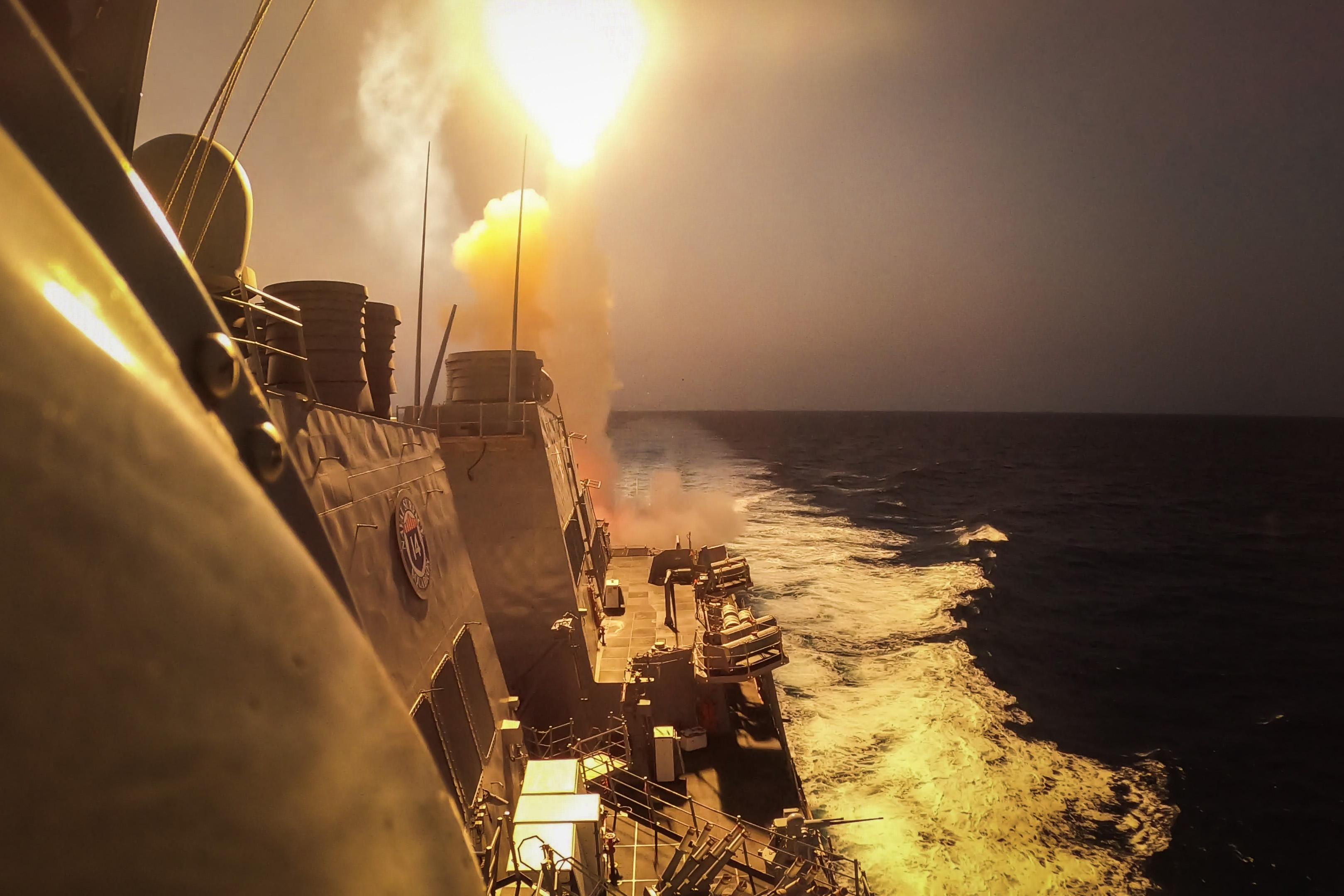
The U.S. military launched fresh air strikes against Iranian coastal defenses and missile sites on July 9, 2026 [1].
These operations target critical infrastructure and the Bushehr nuclear plant to ensure the Strait of Hormuz remains open to international shipping [2]. The escalation threatens to destabilize one of the world's most vital oil transit corridors, which has already triggered a rise in global energy costs.
A U.S. military spokesperson said on Wednesday the strikes were aimed at keeping the critical Strait of Hormuz open to shipping [3]. The military carried out two waves of attacks [4].
Iran responded by launching retaliatory strikes against Kuwait and Bahrain. The Kuwaiti armed forces said they engaged with one cruise missile, three ballistic missiles, and 10 drones in their airspace [5]. One person was injured by falling shrapnel during the intercepts [6].
Iran framed its military response as retaliation against what it described as an existential war [7]. The U.S. said the strikes were a necessary measure to counter Iranian threats to maritime security [8].
The volatility of the region immediately impacted financial markets. Reuters said oil prices rose more than 1% on Thursday following the U.S. strikes [9].
While some reports have characterized the situation as a declared war, official accounts from the U.S. and regional partners describe the events as a series of fresh strikes and subsequent retaliatory actions [10].
“The U.S. military launched fresh air strikes against Iranian coastal defenses and missile sites.”
The targeting of the Bushehr nuclear plant and coastal defenses signifies a shift toward high-value strategic targets intended to neutralize Iran's ability to blockade the Strait of Hormuz. By expanding the conflict into the airspace of Kuwait and Bahrain, Iran is signaling that any U.S. intervention in its territory will result in regional instability, potentially forcing neighboring Gulf states to increase their own military readiness and further driving up global oil premiums.